
Honoring Gordon Parks: A Trailblazer in Black Photography and Storytelling

As a Black photographer, I stand on the shoulders of visionaries who paved the way, using their cameras to tell stories that the world needed to see. One of the most influential figures in this journey is Gordon Parks, a man whose lens captured the beauty, struggles, and resilience of Black life in America.

A Visionary Behind the Camera
Born in 1912 in segregated Kansas, Gordon Parks used photography as a tool for change. He started with a simple camera purchased at a pawnshop for approximately seven dollars and fifty cents, but his talent and perspective propelled him into history. His work documented everything from poverty and racism to fashion and everyday Black life, blending artistry with activism in ways that had never been done before!
Parks was the first Black photographer hired by Life Magazine, where he used his images to challenge racial injustices. One of his most celebrated photo essays is American Gothic (1942), which features Ella Watson, a Black government worker standing with a mop and broom in front of an American flag. These photo essays spoke volumes about the contradictions of freedom and inequality in America. His storytelling through photography humanized Black experiences, making them impossible to ignore.
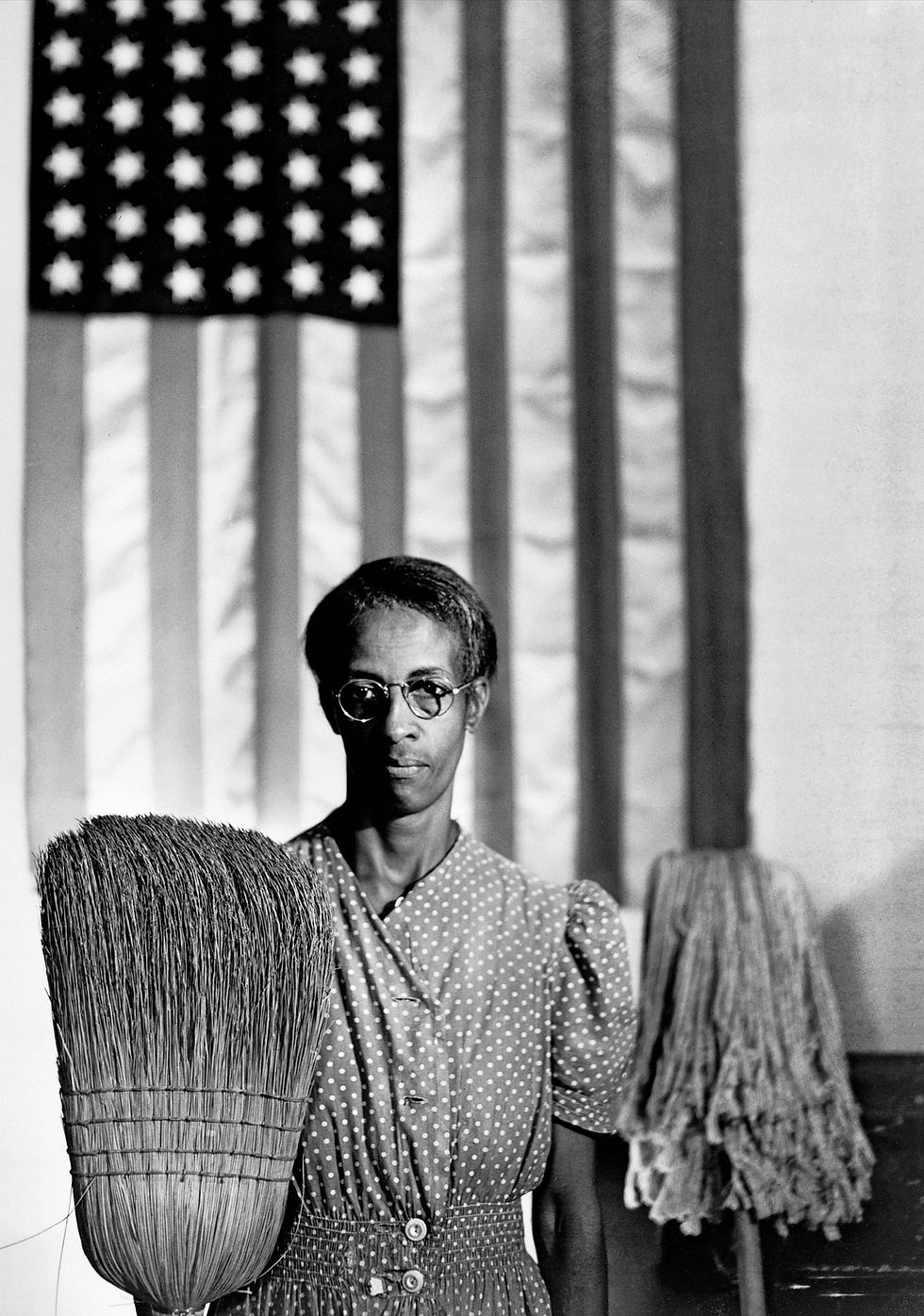
"At first, I asked her about her life, what it was like, and so disastrous that I felt that I must photograph this woman in a way that would make me feel or make the public feel about what Washington D.C., was in 1942. So I put her before the American flag with a broom in one hand and a mop in another. And I said, "American Gothic"—that's how I felt at the moment. I didn't care about what anybody else felt. That's what I felt about America and Ella Watson's position inside America."
–Gordon Parks, 1998.
Opening Doors for Black Photographers
Gordon Parks didn’t just document history—he changed its course. His presence in spaces where Black artists were often excluded set a precedent for future generations of photographers, filmmakers, and storytellers. Through his work, he proved that Black stories mattered and deserved to be seen on the grandest stages.
Beyond photography, Parks broke barriers in film, directing The Learning Tree (1969), one of the first major Hollywood films directed by a Black filmmaker, and Shaft (1971), which redefined Black representation in cinema. His ability to move seamlessly between photography, film, and writing showed that Black artists could—and should—be multi-dimensional in their storytelling.

His Legacy in My Lens
As a Black photographer today, I am inspired by Gordon Parks’ fearlessness, his dedication to truth, and his commitment to telling stories that matter. His work reminds me that photography is more than capturing beautiful moments—it is about preserving history, amplifying voices, and shaping the future.
During this Black History Month, I celebrate Gordon Parks not just as a legendary photographer, but as a beacon of possibility. His legacy challenges us all to pick up our cameras, tell our stories, and ensure that the beauty, strength, and complexity of Black life are never overlooked.


Comments